Get a quote for a bespoke award
Looking for a unique award? EFX can create an incredible bespoke award that’s perfect for you. Just fill out our simple quote form to get started.
Get a quote


We all know that employee engagement is how companies recruit, retain and get the most out of their workers. But how do you create an engaging culture in your business? What really works when it comes to motivating your staff?
The latest statistics show that the key to an engaged workforce comes from recognition.
That recognition can come in different forms and from different people, but data indicates that how valued your employees feel plays a hugely significant role in their engagement and performance.
It’s also interesting to see that employees really want to receive recognition that is genuine and performance based, and that they are motivated by small acts, such as a simple “thank you”, a free lunch or a token of appreciation – not just by pay rises and promotions.
But many organisations are failing to tap into this simple way to improve productivity. This seems to be particularly true in the UK, where workers feel less connected to their organisations, and less motivated to be productive.
In the age of AI, this has never been more significant. With many employers using automation to rate and review employees, are they feeling a loss of connection to their company and culture, and how does that impact their motivation and performance?
If you or your organisation is looking for proof that performance management reward and recognition really works, we’ve got the statistics you need to make your case.
In this article, we’ll show you statistics on:
Once you’ve seen the facts and figures, you’ll understand exactly why rewarding, recognising and appreciating your employees creates a more productive, more profitable and happier workplace.
And can make you more money too!
The UK lags behind other countries in workplace motivation, with only 60% of UK workers motivated to work above and beyond their roles. This is 11% less than the global average.
By contrast the USA saw 75% of workers motivated to go the extra mile, and in India 84% of employees were motivated to do more.
Workers report higher levels of stress throughout 2025, with many feeling like they need to take extra measures to either protect their work life balance through “calendar blocking”.
Calendar blocking is where people put items in their calendar so they can’t be signed up to meetings that may overrun into their own personal time.
It’s clear that in the UK, workers are not feeling motivated to get more involved in their organisations. So, what can we do about it?
AI tools are becoming more and more commonly used across different workplaces, not just for getting work done, but also for internal processes and analysis.
The rise of AI can make workers feel less secure in their own jobs but can also empower them to do more.
Only 43% of UK employees believe that using AI will make them more productive, compared to 58% of global workers.
At organisations that are integrating AI into their processes, nearly half of the workforce has concerns about the stability of their role, with managers more concerned than front-line employees.
However, the vast majority of employees feel that AI has helped them become more productive.
While concerns that automation may lead to job losses are significant, most workers who use AI do feel the benefit of using tools within their role. So, it’s up to employers to ensure that their workforce feels confident and empowered using new technology, rather than resistant.
Employee engagement is a hugely significant tool for modern businesses. Its effect on your workers’ happiness has been shown to improve motivation and performance, and also to significantly reduce staff turnover.
Here are some key statistics that show how recognition is the greatest motivator for your workforce.
Having an engaged workforce pays actual dividends! Research shows that companies with a highly engaged workforce actually make significantly higher profits. So a failure to give your staff an environment where they feel part of the team could actually be having a detrimental financial impact on your business.
Source – Harvard Business Review
Employees who perform well can be four times more productive than their less motivated colleagues.
While managers may feel that employees should go above and beyond to earn recognition, most employees feel that receiving recognition would provide motivation to do more.
The vast majority of workers feel that they are motivated when recognised for their contributions.
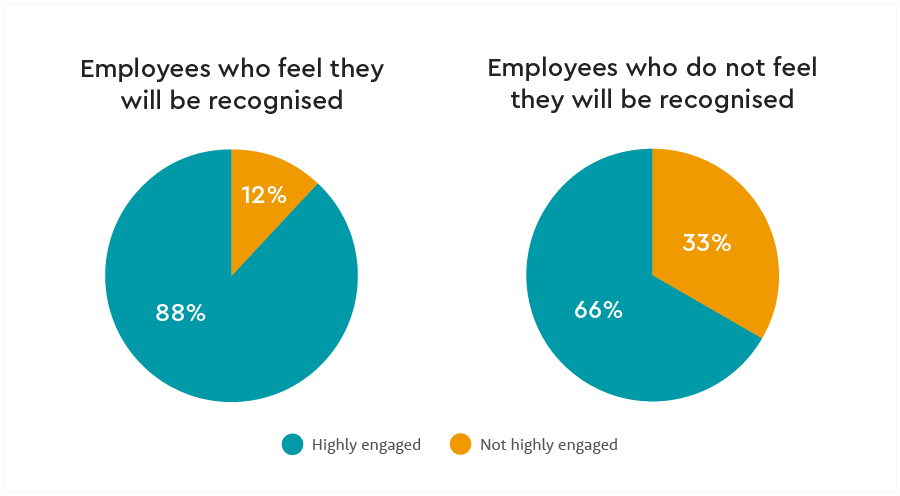
Recognising employees needs to be more than a one-off event, or a box-ticking exercise. Your workforce needs to buy into the process, and believe that their good work will be rewarded. When they do, they’re almost three times as likely to be a highly engaged, motivated team member.
When looking for a new role, employees are actively seeking an employer who uses rewards and recognition in their organisation.
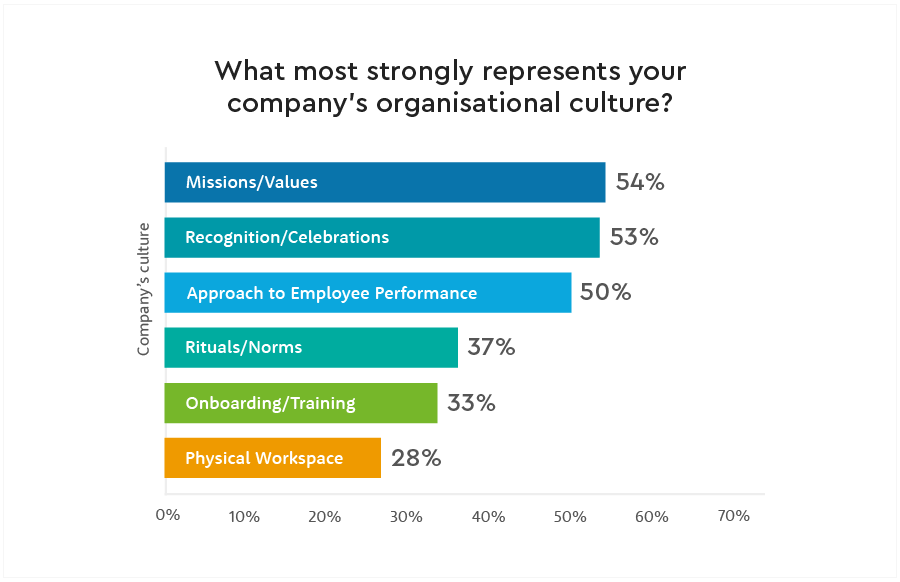
Company events, awards and recognition all help employees feel that they’re part of a strong organisational culture.
While many businesses imagine that financial rewards are the ultimate motivator, nearly half of the workforce would rather work for a company with a culture of employee performance recognition, than for a company that paid 10% more but offered no acknowledgement, praise or thanks.
The impact of rewards and recognition goes a lot further than just motivated staff too. Many businesses notice a tangible benefit when they invest in recognition, from a reduction in the cost of staff turnover, to a rise in profits.
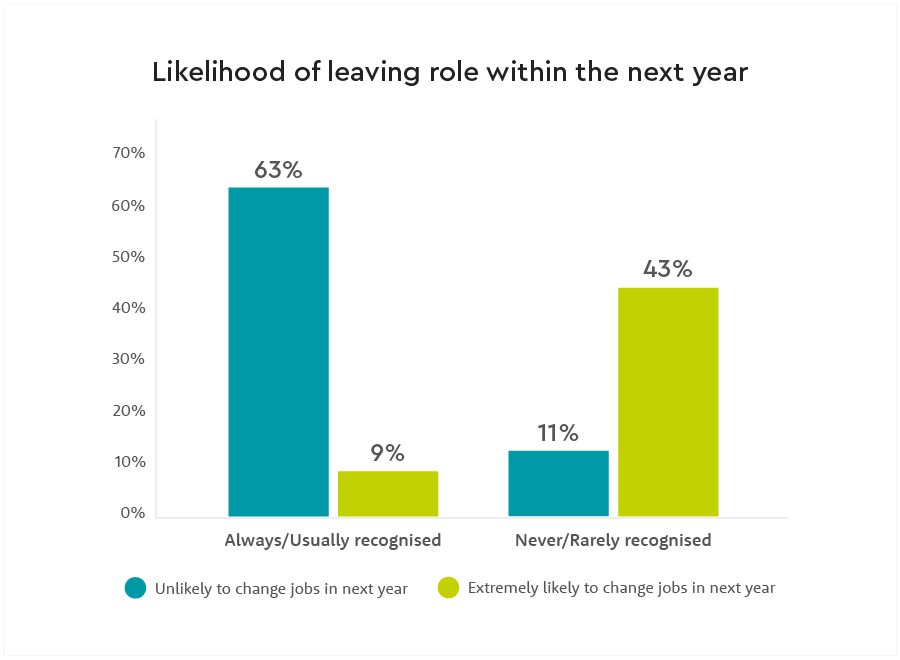
From these statistics it’s clear that a well-recognised team is much happier with their role and their organisation, and far less likely to look for other work. This can have a direct impact on your bottom line as an employer, keeping down the cost of finding, hiring and training new staff.
20 – 92% of workers are more likely to repeat an action they’ve received recognition for
All the data indicates that workers who feel appreciated and recognised work harder, are more productive and are more engaged too. When someone is praised for a specific action or for work well done, they’re much more likely to replicate that effort.
While recognition is clearly a big motivating factor for employee performance and engagement, there’s still a lot of organisations that are yet to embrace it.
On top of that, in many companies there’s a gap between how often managers think they’re providing recognition, and how often workers report receiving it.
Most workers don’t feel like they’re regularly recognised. While it’s easy to dismiss this as perhaps being down to poor performance, the fact that recognition itself has such a positive impact on motivation and engagement means that managers are often better off finding reasons to give positive recognition, rather than saving it only for exceptional efforts.
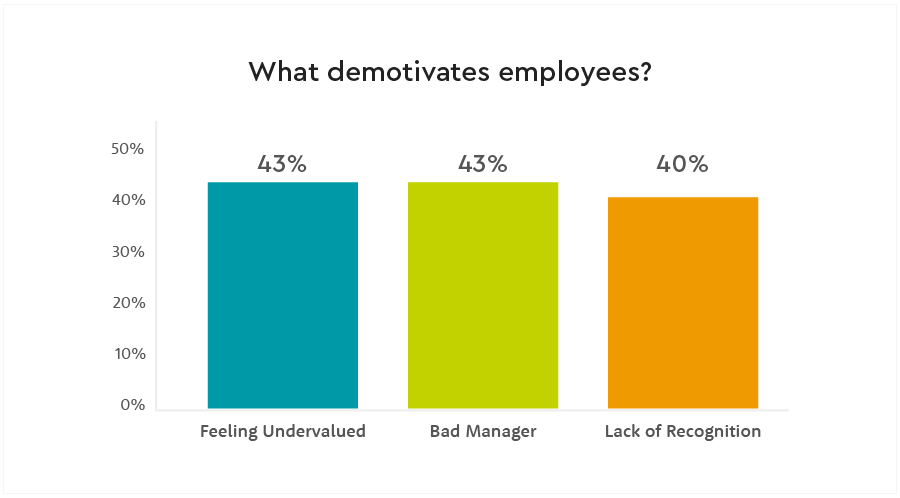
When your good work doesn’t get noticed, it can be difficult to find the motivation to maintain your efforts.
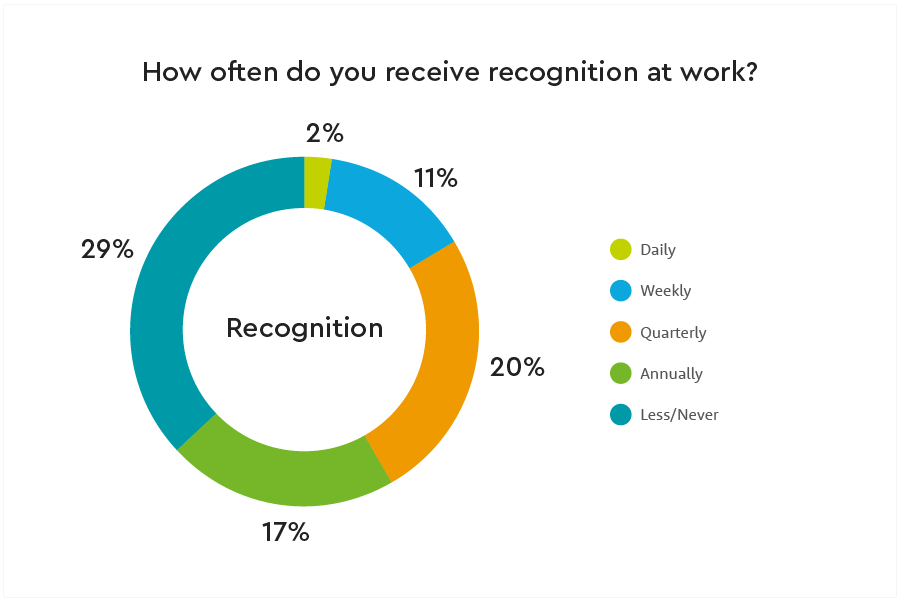
While managers don’t seem to think that recognition is significant, employees are telling us it’s the biggest motivating factor in their performance.
This compares with Autonomy and Inspiration both at 12%, Pay at 7% and promotion at only 4%.
You might be surprised to discover that a huge number of workers don’t expect rewards of gifts or cash, but actually value recognition in the simple form of praise, or a thank you for a job well done.
Statistics also indicate that recognition from team members and peers can often be as rewarding as praise from supervisors or managers.
It’s also significant that workers prefer recognition to be spontaneous, authentic and based on performance, rather than automatically granted for things like years of service.
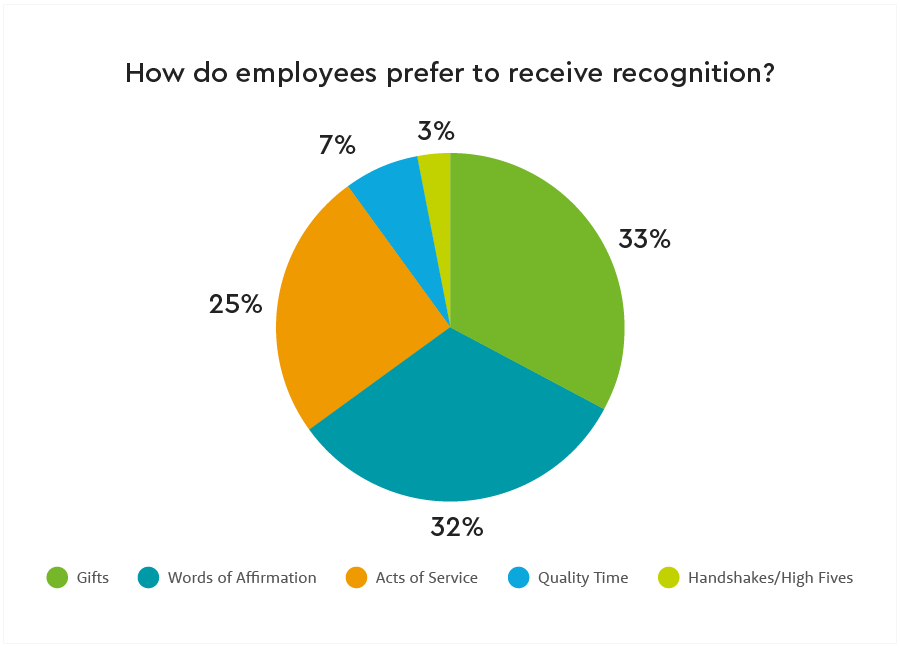
While 33% of employees prefer recognition to come in the form of gifts, nearly as many prefer to have their good work acknowledged. This surprising statistic shows just how significant recognition is, and that it doesn’t need to come in the form of tangible benefits to boost morale and engagement.
Nearly half of employees say that they feel more appreciated when they receive a smaller, unexpected reward like a snack, lunch, or thank you note. And 24% appreciate their employers hosting a small event, like a cocktail hour or party
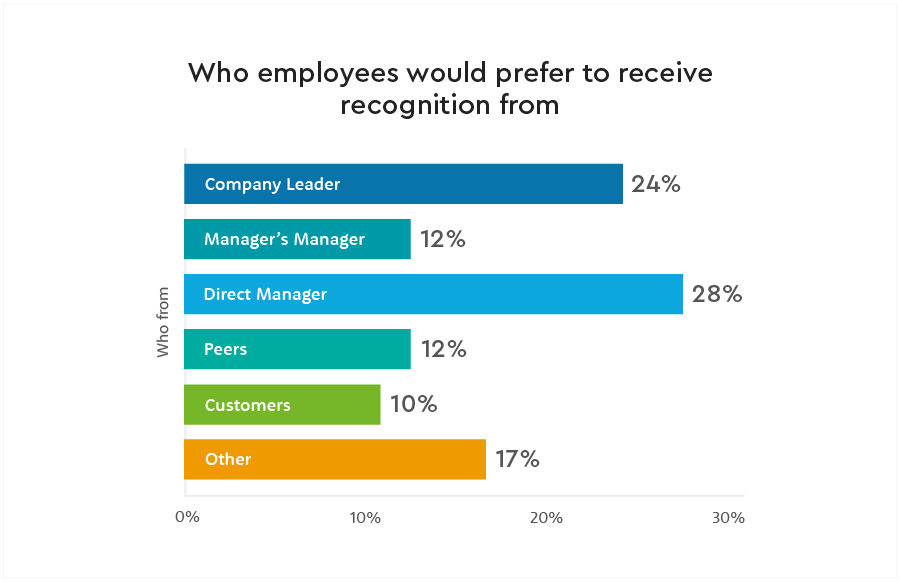
Employee acknowledgement doesn’t need to come directly from managers or supervisors. In fact, receiving recognition from colleagues can be hugely motivating.
While employee happiness can be greatly improved by recognising colleagues, a large percentage of workers still like to receive acknowledgement from their actual manager or supervisor.
When it comes to recognition at work, people’s average experiences and needs are very different depending on their gender and their generation too.
Employee recognition statistics show that women are less likely to be acknowledged for good performance, and prefer different types of reward to men.
Younger generations also prefer a different style of affirmation, with Millennials and Generation Z workers focused more on peer-to-peer recognition, rather than rewards from managers.
While 53% of men say they receive recognition from managers a few times a month or more, only 41% of women say the same.
Workers born 1989 or later are 73% more likely to say they want recognition at least a few times a month compared with those born between 1946-1964 (baby boomers).
While 60% of 18-24 year olds receive daily or weekly recognition, this is only 40% for people over 54. This may partly be due to managers understanding that young and trainee workers need regular encouragement, but it does suggest that older workers don’t receive the same level of recognition.
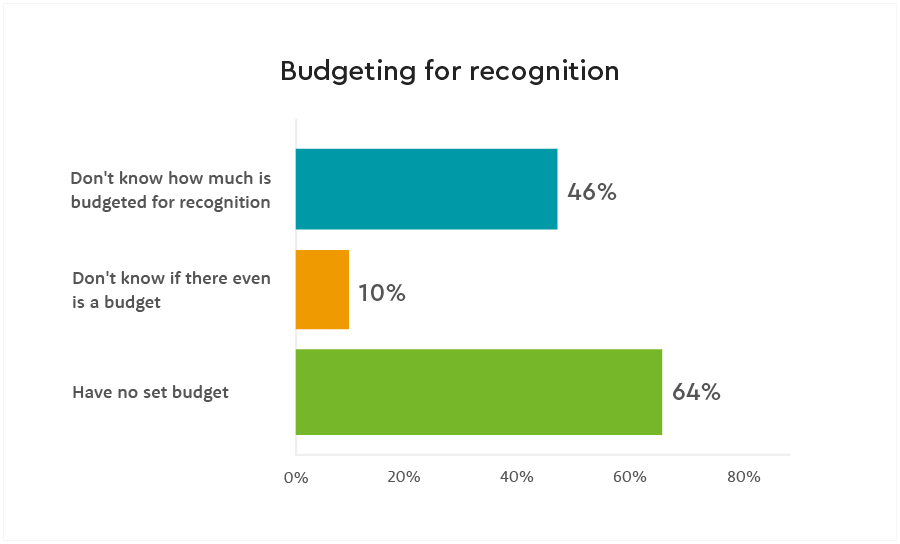
While the data clearly shows the impact of reward and recognition on job satisfaction and motivation, many companies still fail to put measures in place to make recognition part of their organisational culture.
On top of this, the same research indicated that 81% of business leaders do not feel that recognition is a major priority for their organisation.
Lack of engagement has a real impact on an organisation’s bottom line, through unproductive workers and high staff turnover.
Your employee recognition programme can be dead on arrival if it’s too complicated, uses bad metrics, or overuses surveys. All these elements can give you bad results that don’t reward truly good performance.
From all the data we’ve discovered, it’s clear that rewards and recognition are the key to creating a loyal, motivated and productive workforce. And it keeps people happier in their jobs too!
Even the smallest recognition, like a thank you for a job well done, can make a positive impact, so rewarding your workers doesn’t have to be in the form of expensive perks.
What your team really wants is to receive recognition that is:
In the UK, there are clearly significant issues with workforce motivation, as well as a lack of trust in the organisations they work for. Embracing a culture of recognition can substantially alter this trend, and help give employees motivation to be more productive, and to feel more confident in their employers.
Awards events can be a brilliant way to provide your team with the recognition they deserve, and enable you to reward staff from all across the organisation all at once.
They also give people the opportunity to mix and mingle with different departments, and to relax and have a good time too!
While big awards ceremonies can be a great way to honour employees for outstanding achievements or performance, don’t forget that it’s worthwhile to provide recognition on an ongoing, regular basis.
Lots of companies have employee of the month awards as a way to highlight workers who’ve made a special contribution.
But considering that one of the most motivating factors behind an award is the feeling that it has been genuinely awarded for good work, rather than as a formality, it can be a great idea to focus on specific achievements.
For example, making a special effort on a project to meet a deadline, finding an innovative solution, or dealing with a particularly difficult scenario (or client!).
And remember it’s not all about money and gifts either! A simple thank you can make a big difference, as can an award or medal to show your appreciation.
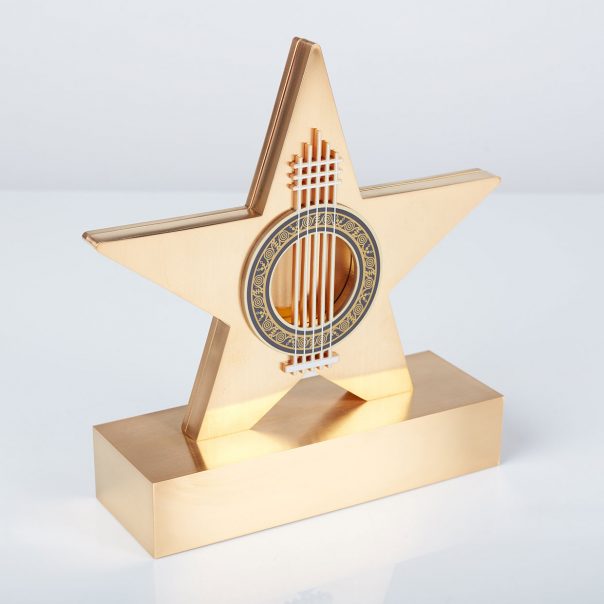
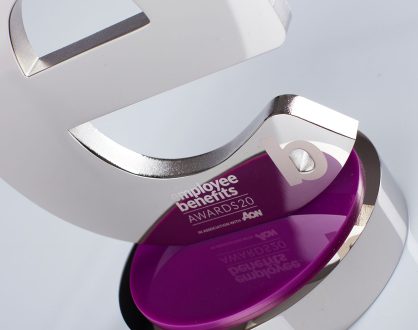
If you’re looking for an innovative way to reward your employees, or have an employee appreciation event upcoming, EFX can provide you with bespoke awards, trophies, medals and more to show your team what a great job they’ve done.
Looking for a unique award? EFX can create an incredible bespoke award that’s perfect for you. Just fill out our simple quote form to get started.
Get a quote for a bespoke award
Want to read similar stories and updates? Here are some more articles that might interest you.